How to Make Sure Your Forklift Load is Stable
Forklift Load Stability Creates a Safe Working Environment
Understand the Load Capacity
Ensuring forklift stability starts with understanding its load capacity. Each forklift comes equipped with a load capacity plate, which specifies the maximum weight and dimensions it can handle safely. Overloading the forklift can result in tipping or loss of control, potentially leading to accidents, damage, or injuries. Operators should familiarise themselves with these specifications and verify that the intended load falls within the prescribed limits before operation.
Load capacity is determined not just by weight but also by the dimensions and positioning of the load. A load with a higher center of gravity or one that extends beyond the forks can destabilise the forklift, even if it is within the weight limit. For example, a forklift rated for 2,000 kg may not handle a load of that weight if it is positioned too far from the load center, as this shifts the balance.
Regular inspections of the load capacity plate are also critical, as they may fade or become illegible over time. If the plate is damaged or missing, consult the manufacturer or supervisor for replacement or clarification. Operators should never estimate load capacity based on visual assumptions or prior experience.
Adhering to load capacity guidelines ensures that the forklift operates within its stability triangle, the three-point system that determines its balance. Operators should also consider factors like attachments, which can reduce the forklift’s rated capacity due to the added weight or altered load positioning. Understanding and respecting the load capacity is not just about following safety standards but about protecting equipment, people, and the work environment from avoidable risks.
Secure the Load Properly
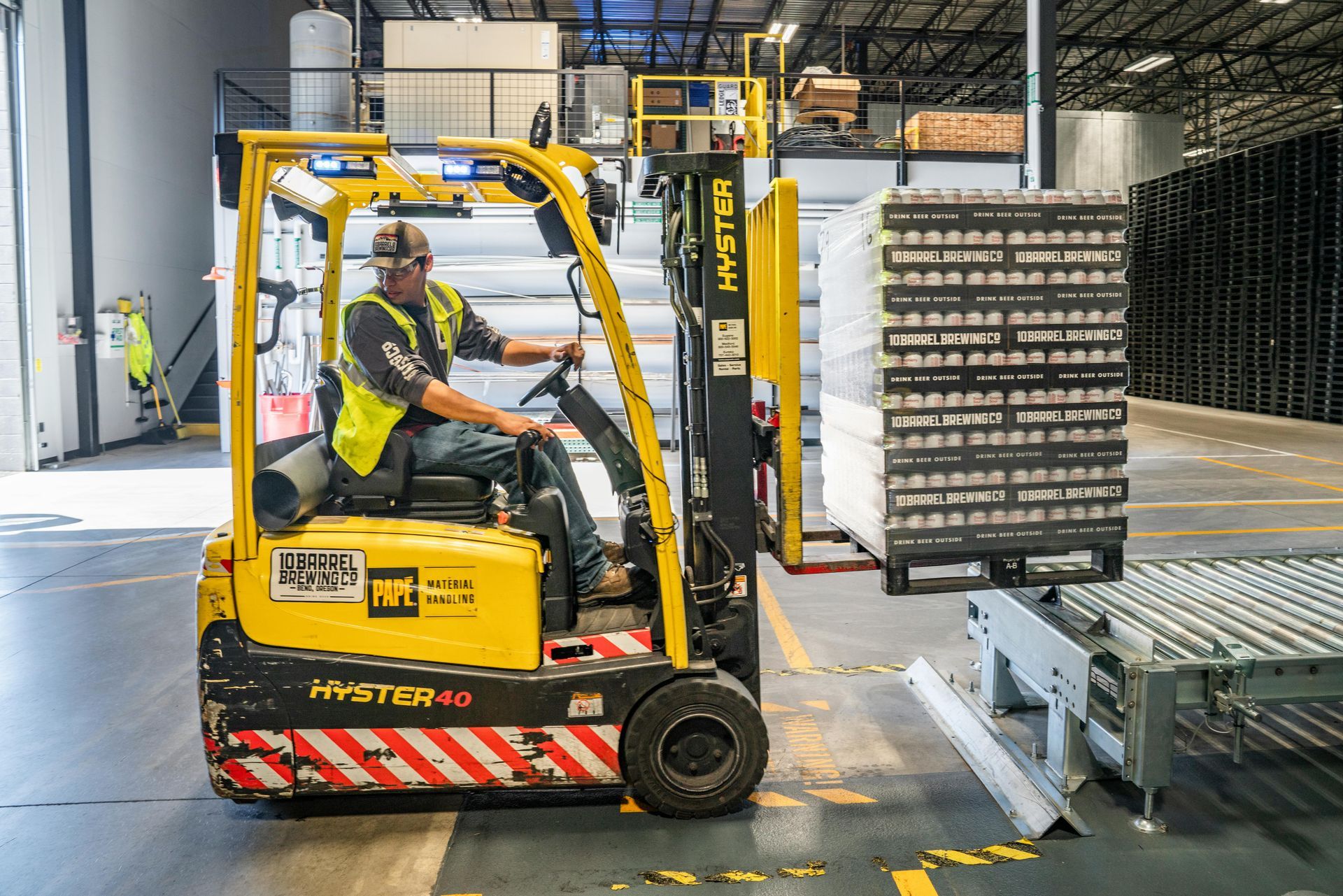
Properly securing the load is essential for forklift stability and operational safety. A loose or unbalanced load can shift during movement, causing instability, tipping, or dropped cargo. Before operating the forklift, ensure the load is evenly distributed across the forks, centred, and tightly secured. Uneven weight distribution can lead to imbalanced loads that affect the forklift's stability and handling.
To secure the load, use straps, shrink-wrap, or other suitable materials. Straps are particularly useful for heavy or irregularly shaped items that may shift under stress. Shrink-wrap is commonly employed in warehouses for palletised goods, providing additional reinforcement and minimising the risk of items falling off during transport. For loose items, consider using containers or bins to consolidate the load and reduce movement.
Another critical aspect is ensuring that the load is placed firmly against the forklift’s backrest, which helps support the weight and prevents it from tipping forward. Forklift operators should avoid picking up loads that exceed the width of the forks, as this reduces control and increases the likelihood of instability.
Before lifting, inspect the load for defects, such as broken pallets or damaged packaging, which can compromise its integrity during transport. Regular checks help identify potential issues that may result in accidents. For tall or awkward loads, adjust visibility by using mirrors or a spotter to ensure a clear path while maintaining load security.
Properly securing the load minimises risks to the operator and surrounding personnel, reduces product damage, and ensures that the forklift operates efficiently and safely within its capacity limits.
Adhere to Load Placement Guidelines
Correct load placement is fundamental to forklift stability and safe operation. The way a load is positioned affects the forklift’s balance and its ability to handle turns, inclines, or uneven surfaces. Adhering to proper placement guidelines significantly reduces the risk of tipping or losing the load.
Begin by positioning the heaviest part of the load closest to the forklift’s backrest. This ensures the weight is distributed near the forklift’s centre of gravity, improving stability. Placing heavier parts further away from the backrest shifts the load center outward, increasing the likelihood of tipping. The concept of the stability triangle—formed by the forklift’s front wheels and the pivot point of its rear axle—illustrates how improper placement can jeopardise balance.
Always ensure that the load is centered on the forks and evenly distributed. An uneven load can make the forklift harder to control and may cause it to tilt to one side, especially during turns. Avoid carrying loads that extend beyond the width of the forks unless absolutely necessary, and ensure that any overhanging portions are balanced to prevent excessive strain on one side.
When stacking multiple loads, ensure that the lower levels can support the weight of those above. Use pallets or other stabilising materials to maintain an even surface. For taller loads, ensure they are stable enough to prevent tipping over during transport.
Load placement also affects visibility. If the load obstructs the operator’s view, drive the forklift in reverse or seek assistance from a spotter. Adhering to placement guidelines ensures that the forklift remains stable, protecting the operator, nearby personnel, and the load itself.
Use Proper Lifting Techniques
Employing proper lifting techniques is critical to ensuring the stability of the forklift and the safety of operations. Incorrect lifting can result in tipping, load loss, or damage to the forklift. Begin by adjusting the forks to the correct width to support the load securely. Ensure the forks are level and aligned to prevent unnecessary strain on the load or forklift.
Before lifting, position the forklift so that the forks are fully inserted under the load. Partial insertion can lead to instability or load slipping. Check that the load is stable and properly secured, and that it is positioned against the backrest to prevent it from shifting forward during transport.
Raise the load slowly and smoothly, avoiding sudden movements. Jerky lifting can destabilise the forklift and cause the load to topple. While lifting, maintain a clear view of the load and surrounding area to ensure there are no obstacles. For higher loads, ensure the mast is properly tilted back to improve stability. Avoid excessive backward tilt, which can strain the forks and create a safety hazard.
Once lifted, keep the load as low as possible while driving. A raised load shifts the forklift's center of gravity higher, reducing stability and increasing the risk of tipping. Sudden stops or turns with a raised load exacerbate this risk.
Proper lifting techniques are essential for maintaining the forklift’s stability triangle, protecting the load, and preventing workplace accidents. Regular operator training and adherence to established safety procedures ensure that lifting is performed efficiently and safely.
Drive with Caution
Driving a forklift with caution is essential to maintain stability, especially when carrying loads. Sudden movements, excessive speed, or improper handling can shift the load and destabilise the forklift, increasing the risk of accidents.
Always operate the forklift at a safe and controlled speed, particularly when turning or navigating through tight spaces. Forklifts are not designed for rapid acceleration or abrupt stops, which can cause tipping. Slow down when approaching corners or uneven surfaces, and use the horn to alert others in the area.
Keep the load lowered while driving, ideally just above the ground. A raised load shifts the forklift’s center of gravity, reducing stability and making it more prone to tipping, especially during turns or on inclines. Avoid driving with the mast tilted too far forward or backward, as this can also affect stability.
On sloped surfaces, exercise additional caution. Always drive with the load facing uphill to prevent it from sliding off the forks. Never turn while on an incline, as this increases the risk of tipping. For uneven or slippery surfaces, reduce speed and ensure the forklift maintains proper traction.
Be mindful of the environment, including pedestrians, obstacles, and other vehicles. Maintain clear visibility of your path and use mirrors or spotters if the load obstructs your view. Following these driving practices ensures not only the safety of the operator and nearby personnel but also the stability of the forklift and the integrity of the load.
Be Aware of the Load Centre
Understanding the load centre is crucial for maintaining forklift stability. The load centre refers to the distance from the load’s centre of gravity to the vertical face of the forks. This distance plays a key role in determining whether the forklift can safely handle a load.
Every forklift has a designated load centre, typically measured in millimetres, as specified on its load capacity plate. For example, a forklift rated for 2,000 kg at a 600 mm load center may not safely handle the same weight if the load centre exceeds 600 mm. A longer load centre shifts the weight further from the forklift’s stability triangle, increasing the risk of tipping.
Operators must consider not only the weight but also the dimensions of the load. Larger or irregularly shaped loads can extend the load centre, even if they fall within the weight capacity. For such loads, use forklifts with extended capacity ratings or additional attachments, such as longer forks, to ensure safe handling.
Awareness of the load centre also helps operators position loads correctly. Placing heavier items closer to the backrest minimises the load centre and maximises stability. Conversely, loads placed further forward or unevenly distributed can destabilise the forklift.
Regular training and adherence to load center guidelines ensure that operators can safely handle a variety of loads. By understanding how the load centre affects the forklift’s balance, operators can prevent accidents and maintain stability during operation.
Operate on Stable Surfaces
Operating a forklift on stable surfaces is essential to ensure both stability and safety. Uneven, slippery, or sloped surfaces significantly increase the risk of tipping or losing control of the forklift, especially when carrying heavy loads.
Before beginning operation, inspect the ground conditions in the work area. Look for hazards such as potholes, debris, or oil spills that could cause the forklift to tilt or skid. Operating on uneven ground shifts the forklift's centre of gravity, making it more prone to tipping. If the surface cannot be stabilised, consider using a forklift designed for rough terrain.
Slopes and inclines require additional caution. Always approach slopes straight on, with the load facing uphill to prevent it from sliding off the forks. Avoid turning on inclines, as this significantly increases the risk of tipping. When descending, maintain a controlled speed and keep the load positioned uphill relative to the forklift.
Wet or slippery surfaces, such as those caused by rain or spills, reduce traction and make the forklift harder to control. Reduce speed and use smooth, deliberate movements to maintain stability. If possible, dry the surface or create a temporary path using mats or other materials.
Maintaining stable surfaces is not only about preventing accidents but also about protecting the load and the forklift. A firm, level ground allows for smoother operation, reducing wear and tear on the equipment and ensuring efficiency in the workplace.
Stay Within Legal and Safety Standards
Adhering to legal and safety standards is fundamental for safe forklift operation in Queensland. Workplace health and safety regulations outline strict guidelines for training, maintenance, and operation to prevent accidents and ensure a safe environment.
Operators must have a valid Queensland forklift licence, as required by Queensland regulations. This ensures they are adequately trained in forklift operation and safety procedures. Employers must provide ongoing training and refreshers to keep operators up to date with current practices.
Regular maintenance and inspections are also mandated by safety standards. Forklifts must be inspected for mechanical issues, such as faulty brakes, worn tires, or hydraulic leaks, to ensure they remain in safe working condition. Maintenance records should be kept to demonstrate compliance.
Site-specific safety protocols are equally important. These may include designated pathways for forklifts, speed limits, and rules for interaction with pedestrians. Employers should conduct regular risk assessments to identify and mitigate potential hazards in the workplace.
Additionally, operators must adhere to load capacity guidelines and avoid overloading the forklift. Compliance with these standards not only prevents accidents but also avoids legal repercussions, such as fines or penalties for non-compliance.
Staying within legal and safety standards ensures a safe and efficient working environment, protects workers and equipment, and maintains the company’s reputation for prioritising workplace safety.
Forklift safety is premeitated on the intention of the operator. They must ensure all efforts are pursued to provide safety for people in the general vicinity and for their load. By using these procedures you will have a long, fruitful and safe career operating forklifts in warehousing, manufacturing and mining environments.
To acquire your valid Queensland Forklift Driver Licence contact EDB Training Services. One of Queenslands top providers of forklift training.