The Top 10 Most Asked Questions About Getting a White Card In Queensland
All Your White Card Queensland Questions Answered Here

When considering a career in the construction industry in Queensland, Australia, obtaining a White Card is an essential first step. The White Card is required for anyone looking to work on a construction site to demonstrate their knowledge of workplace safety regulations. This document is officially recognized nationwide and acts as proof that the holder has completed training in construction safety. Let's explore in more detail the top 10 questions that prospective White Card holders in Queensland commonly ask.
1. What is a White Card, and why do I need it in Queensland?
A White Card is a general construction induction card that verifies a worker's ability to understand and implement safety procedures in the construction industry. The construction industry is inherently high-risk, with potential hazards ranging from machinery accidents to falls and exposure to dangerous substances. The White Card serves as proof that you are equipped with the basic knowledge required to minimize risks on the job site. In Queensland, it is mandatory for anyone entering a construction site to have this card. This includes laborers, tradespeople, site managers, and anyone whose role involves being on-site regularly. Without a White Card, you cannot legally work in construction in Queensland or anywhere else in Australia.
2. How do I get a White Card in Queensland?
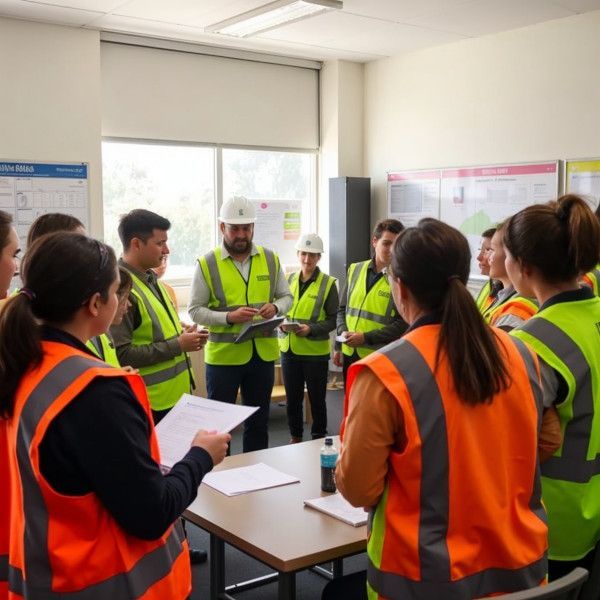
The process of getting a White Card in Queensland involves completing a general construction induction training course. The official course code is CPCCWHS1001 – "Prepare to work safely in the construction industry." The course must be delivered by a Registered Training Organisation (RTO) accredited by the Australian Skills Quality Authority (ASQA). The training focuses on fundamental construction safety principles such as hazard identification, risk management, and legal responsibilities in maintaining workplace safety. Upon successful completion of the course, participants receive a White Card, allowing them to work in construction across Australia.
3. Is the White Card course available online or in person?
In Queensland, you have the option of completing the White Card course either online or in person. Many Registered Training Organisations (RTOs) offer flexible learning options to suit different preferences. If you prefer face-to-face learning, classroom-based courses are available, allowing you to interact with instructors and classmates. However, for those who prefer convenience or are unable to attend in-person training, online courses are a popular option. The online format offers flexibility in terms of when and where you complete the course, making it ideal for those with busy schedules. Both formats are equally valid, as long as the course is provided by a registered RTO.
4. How long does the White Card course take to complete?
The duration of the White Card course is relatively short, typically taking between 6 to 8 hours to complete. This timeframe includes both the training and the final assessment. The course is designed to be comprehensive yet efficient, allowing participants to cover all essential construction safety information within a single day. Whether you take the course online or in person, it is structured to provide you with the knowledge required to operate safely in a construction environment. The assessment at the end of the course tests your understanding of the key safety principles and is usually straightforward for those who have paid attention during the training.
5. How much does it cost to get a White Card in Queensland?
The cost of obtaining a White Card in Queensland varies depending on the training provider and the delivery method. Generally, prices range from $80 to $150. Online courses tend to be slightly cheaper due to the reduced overhead costs, while in-person training can be more expensive because of the need to hire trainers and rent classroom space. It is important to ensure that the provider you choose is a Registered Training Organisation (RTO) recognized by ASQA, as this guarantees that the training you receive is legitimate and will be accepted nationwide. Some employers may cover the cost of the White Card for their employees, but it is always a good idea to confirm this before enrolling.
6. How long is the White Card valid in Queensland?
One of the advantages of the White Card is that it does not expire. Once you have obtained your White Card, it is valid for life, meaning you will not need to renew it as long as you remain active in the construction industry. However, there is a catch: if you have not worked in the construction industry for two consecutive years, you may need to retake the White Card course. This ensures that anyone re-entering the industry after a prolonged absence is up to date with current safety standards and regulations. It is important to keep your White Card in a safe place, as you may be asked to present it when starting a new job.
7. What documents do I need to provide for White Card registration?
When registering for the White Card course, you will need to provide some form of valid identification. Typically, this includes a driver’s licence or passport. You may also be required to supply your Unique Student Identifier (USI), a government-issued number used to track your training records across Australia. If you do not have a USI, you can apply for one online through the government’s official website. Some training providers may ask for additional documentation, so it’s a good idea to check the specific requirements of your chosen RTO before enrolling.
8. Can I use a White Card from another state in Queensland?
Yes, the White Card is nationally recognized, meaning that if you obtained your White Card in another state, you can still use it to work in Queensland. This national recognition ensures that workers who have already completed the general construction induction course do not need to retake it when moving to another state or territory within Australia. However, if your White Card was issued before a certain date, you may be required to upgrade to the newer, nationally standardized version. If you're unsure whether your White Card is accepted in Queensland, you can check with your employer or the relevant authorities.
9. What is covered in the White Card training?
The White Card training covers a broad range of topics related to workplace safety in the construction industry. This includes understanding workplace safety laws, identifying potential hazards, and knowing how to report risks. The course also teaches participants about personal protective equipment (PPE), proper manual handling techniques, and safety signage on construction sites. You will learn about your rights and responsibilities as a worker and the role of employers in ensuring a safe work environment. The goal of the training is to provide you with a strong foundation in workplace safety so that you can operate confidently and responsibly on construction sites.
10. How soon will I receive my White Card after completing the course?
After successfully completing the White Card course, you can expect to receive your physical White Card in the mail within 1 to 2 weeks. Some Registered Training Organisations (RTOs) may also offer a digital certificate immediately upon course completion, which can serve as temporary proof of your qualification until the physical card arrives. The processing times may vary slightly between providers, so it's worth asking about the expected turnaround time when you enroll. If you are in a hurry to start working, choosing a provider that offers instant digital certification might be the best option for you.
Conclusion
Obtaining a White Card in Queensland is a straightforward process that involves completing a recognized training course designed to promote safety in the construction industry. Whether you choose to take the course online or in person, it will equip you with the essential knowledge required to work safely on construction sites. The White Card is not only mandatory for construction workers but also an important safeguard for ensuring that everyone on site is aware of potential risks and how to mitigate them. By understanding the key questions about White Card training, you can approach the process with confidence and clarity, ensuring that you meet all legal and safety requirements for working in Queensland’s construction industry.